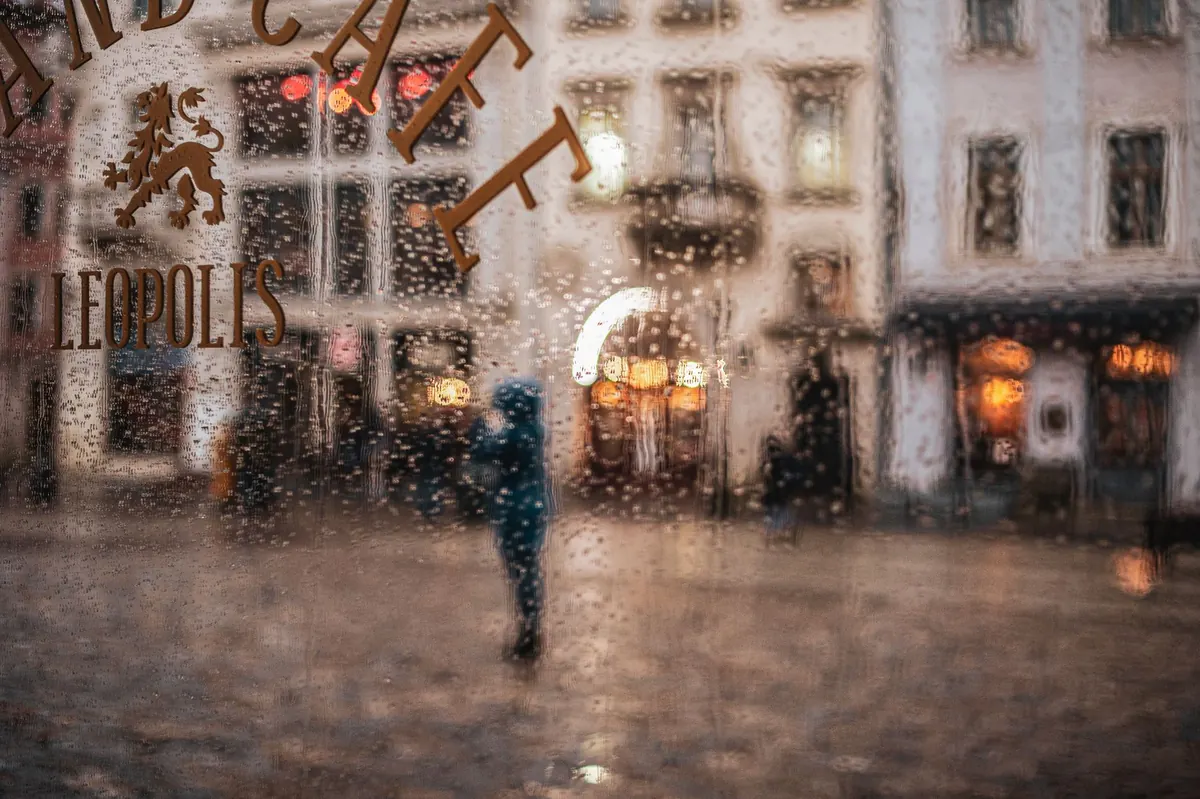
Rainy-Day Plan B: Indoor Things to Do Near Loggia Della Baia
Rain on the bay rarely arrives quietly. It comes in off the water, softens the terraces, pushes everyone under the arcades and quietly rewrites the day you had planned. The temptation is to retreat upstairs and wait it out until dinner. Resist that. These towns were built for weather — covered walkways, thick-walled churches, bakeries that open early and don't blink at a downpour — and a wet afternoon is the best excuse you'll get to see the places you'd otherwise stride past on your way to the beach.
What follows isn't a fixed itinerary. It's a set of options that work in almost any combination. Pick two or three, let the radar decide the rest, and keep a little slack in the plan for the moment the sky clears.
Coffee first, and don't rush it
Start where the weather can't reach you: at the bar. Order an espresso at the counter, drink it standing, and then order a second one. This is not indecision; it's the local rhythm. If the morning is properly grey, add a pastry — most bars have a case of cornetti and something local behind the glass, and asking "what's fresh?" is a perfectly good opening line.
One practical detail worth knowing: in Italy you often pay less standing at the bar than sitting at a table with service. If you want to camp out for an hour with a notebook or a newspaper, take the table and accept the small surcharge; if you're in and out, stay at the counter with everyone else. Either way, the windows fog up, the rain keeps falling, and nobody hurries you.
The small museums nobody queues for
Skip the famous names on a wet day if you can — that's when half the coast has the same idea. The better move is a small civic or parish collection: a diocesan museum with three extraordinary paintings and no crowds, a little archaeological room with Roman fragments found in a nearby field, a ceramics or maritime collection that explains why the town looks the way it does.
These places are charming and slightly chaotic. They also keep unusual hours, so a phone call or a look at the door before you commit an hour of walking is time well spent.
Questions worth asking before you set out
- Is the collection itself open, or only the building? Small museums sometimes close sections without updating anything online.
- Are there fixed visiting times? Many open only for a morning slot or a couple of afternoon hours.
- Is it closed on Mondays? In Italy, that's a common day off for museums and galleries — check before you walk.
- Is a guided visit required? Some sites only admit visitors with a guide, at set times.
- Do they take cards, or should you bring cash? Small operations often don't.
If a museum turns out to be shut, don't treat it as a wasted trip. You're already in the oldest part of town, under the arcades, and there's usually a second door worth trying fifty metres away.
A food-shop crawl that counts as sightseeing
This is the rainy-day activity I'd choose over almost anything else. Give yourself an hour, a canvas bag and a loose list. Go into the bakery and buy bread by weight while it's still warm. Ask the cheese counter what's from the surrounding hills and take a small piece of two things. Find the shop that sells cured meats sliced to order, and the one that pours olive oil onto a spoon for you to taste before you buy a bottle.
Useful things to gather while you're out:
- Bread and focaccia for later — it will outlast the rain.
- Local cheese, asking for something aged and something fresh.
- Cured meat sliced thin, in a quantity the shop assistant will happily advise on.
- Olive oil, ideally from a shop that lets you taste before deciding.
- Something sweet — biscuits, honey, a jar of jam — to take home.
- Seasonal fruit from the covered market, if there is one.
A word on timing: some smaller shops still close for a couple of hours around lunch, and many shut early in the afternoon. Go mid-morning or after four. Bring cash for the smallest places.
Take the long lunch seriously
Rain makes an argument for the two-hour lunch that a sunny day never quite manages. Book a table at a trattoria rather than gambling on a walk-in, and specifically ask for somewhere inside rather than on the covered terrace, where the wind tends to win. Order the daily menu if there is one — it's usually what the kitchen cooks best and what the regulars are eating.
Then stay. Order the second course. Have the cheese. Let the coffee arrive without asking for the bill the moment the plates are cleared. The rain will do what it does; you'll be dry, fed and entirely unbothered. If you're travelling with children, lunch is also the simplest way to reset a wet afternoon that has started to fray.
Churches, cloisters and covered streets
Religious buildings are the great unsung shelter of any Italian town: cool, quiet, often astonishing, and free or nearly so. Step in out of politeness to the weather and stay for the fresco fragments, the side chapels, the worn stone floor and the noticeboards that tell you more about local life than any guidebook.
Two small courtesies make the visit better for everyone. Cover shoulders and knees — a light scarf in your bag solves this in seconds — and keep your voice down if a service is underway. Check the times posted at the door; churches commonly close for a few hours in the middle of the day and reopen in the late afternoon. Photography may be restricted in some areas, so look for signs rather than assuming.
And don't overlook the plainest option: the arcades. A slow walk under a covered street, stopping at a bookshop, a print shop, a hardware store that's been there for decades, is a perfectly good way to spend an hour while the water runs off the eaves beside you.
Learn something with your hands
If you'd rather do than look, a wet day is the moment to book something participatory. A pasta-making session in a home kitchen or a small cooking school, a tasting at a wine shop or an oil producer, a ceramics workshop, a half-day bread course — these are the experiences that tend to be remembered, and they don't care about the weather. Ask at your accommodation or at a local food shop; the person behind the counter usually knows who teaches and who is good at it.
Less active but equally effective: the town library, a small cinema showing films in their original language, or a spa afternoon if there's one within reach. All three are quietly civilised ways to let the worst of the weather pass, and none requires a booking weeks ahead.
A short wet-weather checklist
Before you head out, do four things. Check opening hours by phone for anything you're crossing town to see, especially on a Monday or in the early afternoon. Note that small museums and shops can change their hours at short notice, so a quick call beats a long walk. Dress in layers with something water-resistant on top, and accept that shoes will get wet — a second pair in the bag is worth the weight. Finally, keep the plan loose: two fixed points and a lot of walking in between, so that when the rain stops you can step outside and change your mind.
And if the weather clears mid-afternoon, take it as a gift. The light after rain on the bay is the best light of the day, the streets empty out, and the terrace will be waiting when you get back.
Photo: Alexander Zvir / Pexels